
From Past to Present
A History of Richmond Primary School
Taken from the 1975 Scholastic Magazine
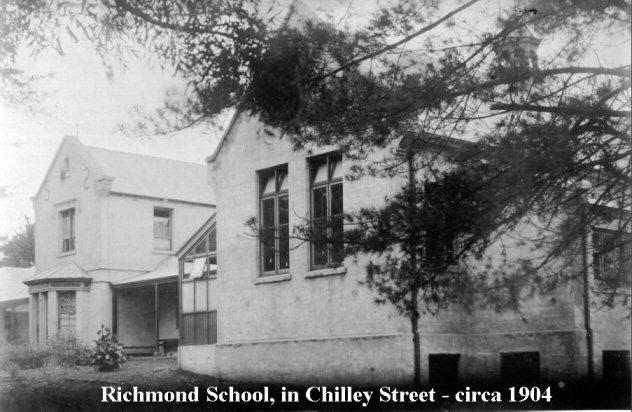
Come with me on a “backwards” journey! Let us start with a very big jump across 124 years to land in the year 1851. Your great, great, great grandparents were living then. It was in this year that the first school in Richmond began. The Headmaster was Mr William McKenzie, a teacher trained in Edinburgh, Scotland and ancestor of many of the McKenzie’s in Richmond today. Perhaps he had read about Mr Joseph Byrne’s Immigration Scheme in a newspaper named “The Echo” which was published in London by Byrne & Company, Natal Immigration and Colonization Company. Mr McKenzie made enquiries and was offered the post of schoolmaster in the little village of Richmond, Natal.
On 20th April 1850, Mr and Mrs McKenzie with their children, Elizabeth and Robert, sailed for Natal in “The Conquering Hero”. The little ship landed in Durban on 29th July 1850 – a very different place from the busy port you know today. The main street was wide and sandy with neither pavement nor gutter, the few shops mostly mud-walled and thatch-roofed. Lumbering ox-wagons, mule-drawn carts and smart horse-drawn traps moved along the dirt roads to the shouts of Zulu drivers and the clap of their long whips. And there, to meet the people who had immigrated, was Mr Dirk Uys whose parents farmed in the Richmond area, south east of the village commonage. He brought our hopeful schoolmaster, his family and possessions to Richmond, which had no house or shelter of any kind to offer them. Mr Byrne had failed to carry out his promise that a building would be provided. The kind Dirk Uys suggested that they borrow a large tarpaulin from him to cover their four-poster bed and so make a shelter until a house was built. Surely no other Headmaster in Natal has lived with his family on a four-poster bed!
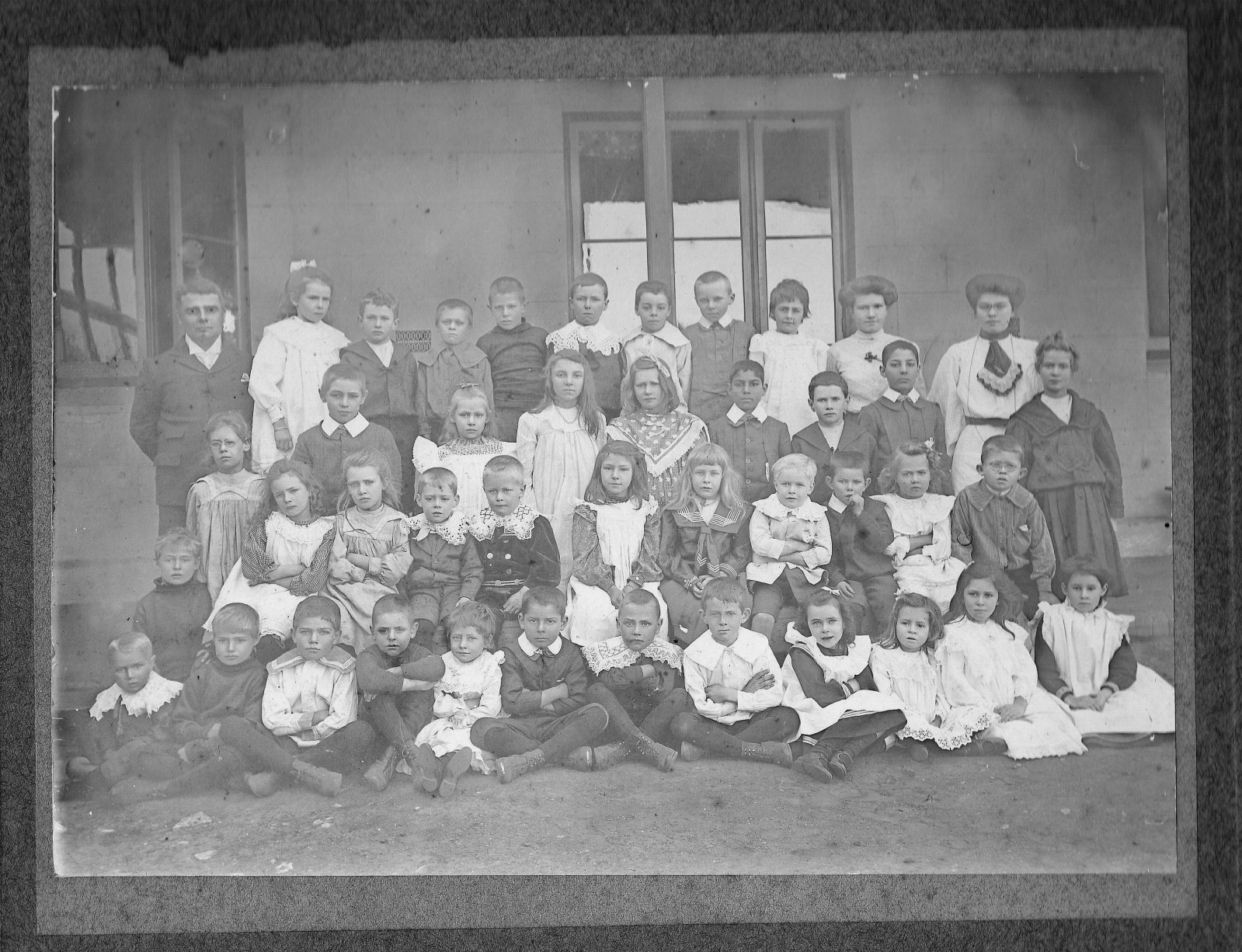
Mr McKenzie must have tired of his cramped quarters for he went to Pietermaritzburg after some weeks and in the Natal Witness of September 6th 1850 this advertisement appeared – “Mr W. McKenzie having arrived in this district to take charge of the schools of the Illovo, and being disappointed by the failure of Mr Byrne & Co. in carrying out their arrangements for providing a building, etc. intends opening an academy for children of both sexes, under his own and Mrs McKenzie’s care.”
Anxious Richmond parents persuaded the Natal Government to help them pay the Schoolmaster and, on August 12th 1851, Mr McKenzie received a letter from Lieut. Governor Pine’s office, making him a annual allowance of £50 as from 1st September 1851. This letter was signed by the Governor’s Secretary, Mr G. Moodie, whose daughter later taught at the school. At the time 11 boys and 10 girls attended school. Parents paid a fee of 2 shillings and sixpence per child, per month, to the schoolmaster, but those who could not afford this, paid by giving their labour. Remember, there were buildings to be put up.
In the little churchyard behind the Methodist Church in Harding Street you will find the graves of Mr and Mrs McKenzie.
In 1857 Mr David Taylor was the new headmaster, at a salary of £65 per annum. Some years later when Mr J Angus was schoolmaster of Richmond he travelled the seven miles to Byrne on Saturdays and holidays to teach the farm children there. Another school master was Mr Kearsley, whose school in 1864 was in the old library. This old building still stands near to Mr T Harrison’s Store in Harding Street filled sadly with lumber now instead of books and children. Mr Kearsley also taught Arithmetic and Writing in a part-time capacity at the first boarding-school for girls in Natal, St. Mary’s opened in April 1870. There is a stone seat in the grounds of St. Mary’s Church which shows where this school once stood.
You should have noted by now, that so far in our story, there has not been a real school building (apart from St. Mary’s) in Richmond. But at least in 1882 the Government of Natal built a school with accommodation for boarders. This building stands in Chilley Street and you know it as the Indian School which was recently badly damaged by fire. A sad happening because of its interest to us historically. Mr NJ Hedgcock was the headmaster and by 1885 had 100 children at school, 20 of those being boarders. The school developed a name for “thoroughness of work”. One Inspector of schools commented in 1888 that “homework was limited out of consideration for teachers” and that “marking is limited to one hour a day extra-murally.” A comment in 1889 reads: “Not sufficient exercise book work given to Juniors. Senior class (this included Std. 7) making good progress in Latin and Euclid!”
A cadet detachment was formed in 1894 when Mr Rees was in charge of the school. The boys, in uniform of blue jerseys and puttees, looked very smart. They were drilled at first by a sergeant of the Natal Police. They had a fife and drum band too, the instruments having been presented by Mr Joseph Baynes of Nels Rust.
The girls had to be content with “dumb-bell drill” taken by a teacher. Miss Hedgcock, daughter of the old headmaster, taught on Mr Rees’ staff in 1897 and was still teaching 41 years later when she retired to marry!
The railway came to Richmond in 1897. Children from Nels Rust (now Baynesfield), Arnolds Hill and nearer, arrived at school at 9am and, as the train left at 2:45pm, they could not be kept in! How the other children used to envy them! Some children living along the Byrne road arrived at school on horseback, turning the horses into the school paddock to graze till it was time to return home. This paddock was also the football field and cricket pitch.
When Mr RJ Gibbs was headmaster in 1906, the house opposite the school was, for a short time, used for the boarders. The school was increasing in numbers. In 1909 there was compulsory attendance at school for white children at the age of 7 and by 1914 children could start school at 6 years old.
Mr RCA Lindsay was headmaster from 1919 and it was during this time that the Education Department bought the Nicholson farm, the property on which your school now stands. The farmhouse situated on the terrace above the present woodwork and music room as altered in 1920 to become a hostel for the boarders. These children, numbering about 30, walked to school in Chilley Street every morning. It was not until 1936, during Mr Harper’s reign, that the school you use today was built – five classrooms, a domestic science cum woodwork room, and the office block.
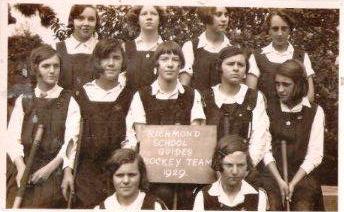
Soccer was the winter game in those days, (rugby was introduced only in 1960!) Mrs Maurice Osborn, “”Fish” Flett, Bernard Antel, Oliver Arnold and Ravenor Nicholson were all pupils at that time. I expect they will remember Mr Singh who ran a bus service and took the soccer teams in to Pietermaritzburg, where they played League soccer and won all their matches in 1929. They must have been very fit for their headmaster, Mr E.V. Butler made the boys and girls run around the block every morning in winter when the frost lay white along the pavement’s edge.
In summer the children used to swim at the farm “Maryfield” in Gordon’s Pond. The Natal Witness of March 10th 1934 has a picture of an old steam roller that ran away and plunged into the swimming pool. It made an ideal diving board!
The old hostel was demolished in 1948, watched by sad-faced boarders, but there was a brand-new, double-storeyed building for 64 children in its stead.
With Mr HM Baxter’s arrival, the planning and layout of the school grounds began in earnest. There were enlargements to the school and hostel. In 1968 the boys’ wing, recreation rooms, car ports, matrons’ wing and sick bays were added.
Classes for Afrikaans speaking pupils were begun in 1955 and by 1963 the Standard VI class was absorbed into High School. Three bursaries were made available to children at the end of 1964 – the Joseph Baynes (since withdrawn), the Richmond Town Board and the Richmond Agricultural Society bursaries.
Mr Baxter’s office work had grown so heavy that a school secretary was appointed in 1966 and Mrs Helen Taynton joined the staff, cheerfully dealing with all problems from cut fingers to school fees. After 19 years of service to the school, Mr Baxter retired at the end of 1970. Vumindaba, Induna and school servant for 44 years, had retired a few months before. He must have started work in 1926 with Mr EV Butler, working under 7 headmasters in all!
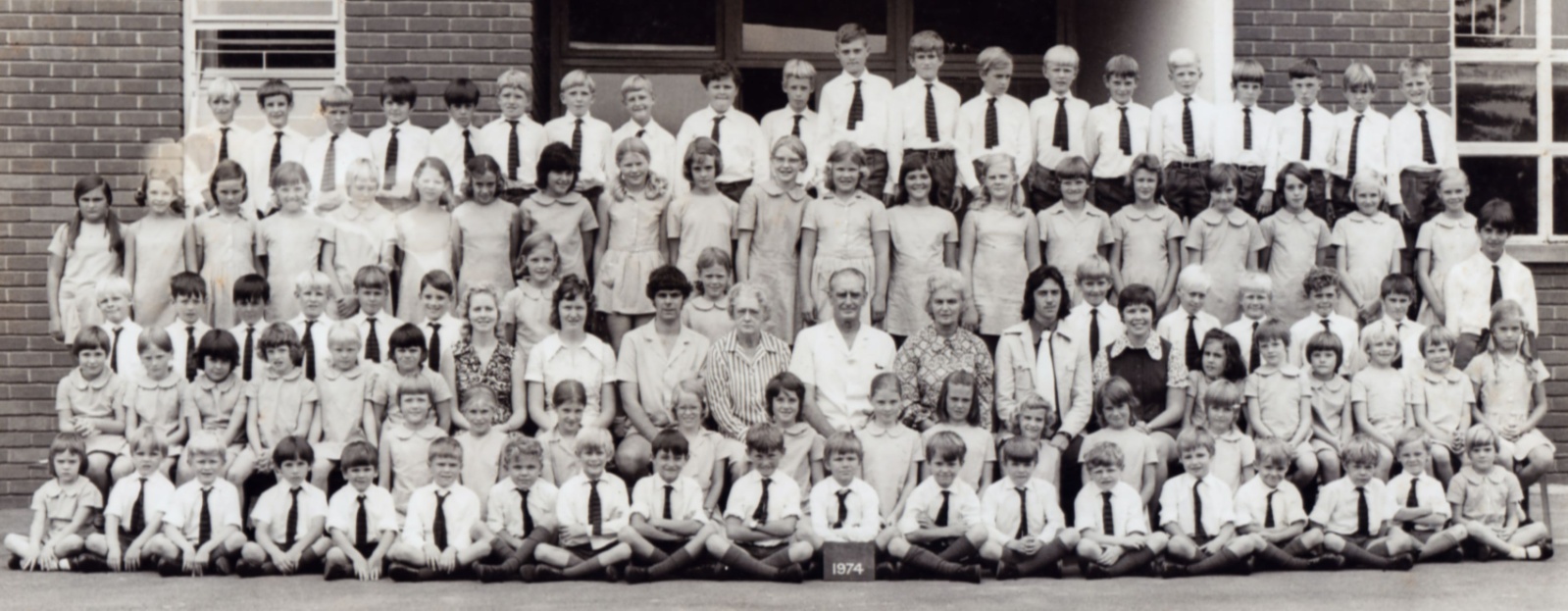
Mr CR Brown who was appointed principal upon Mr Baxter’s retirement was unfortunately forced by ill-health to retire in March 1974.
New plans for the school’s development are in the air and Mr N Shuttleworth, who carries the baton now, has an exciting prospect ahead of him. You have a school to be proud of – one of the oldest in Natal, with a sturdy background and a wonderful record of attainment in the academic as well as the sports field. Richmond School has walked steadily forward since 1851, long may it prosper!
Mrs. A.O. Parkinson
An update on History (1980 – 2011)
Mr Shuttleworth increased the sporting activities at Richmond Primary School, saw the building of the hall in 1981 and the laying of the anchor in 1980 where it stands presently. The advent of school productions and school plays began under the auspices of Marian Bruce and Felicity Setterberg in 1984 (Sunset Serenade) who also took over the school choir from Mrs Vonkeman. The plays and school choir continued later with Marian Bruce and Robin Radley, a working relationship that has spanned over 24 years.
Mr Shuttleworth’s retirement saw the end of a one race school. Mr Shuttleworth retired in 1991 and Mr. Richard Gibbs took over in 1991. Mr. Gibbs tenure as headmaster was a time of many endings and the dawn of many new and rich beginnings. The school became the wonderful multiracial, multicultural, ideally “rainbow nation” that it is today. The new school was planned and built during the early 1990’s and stands proud now in 2011, housing the birthplace of excellent education for all the children who attend Richmond Primary. Plays, choir, sport, art and education are the order of the day.
Quintin St. Leger took over as headmaster in 2003. He is also a past pupil of the school (1961 – 1966). The school is now the most advanced in every respect that it has ever been!
The IT world has most certainly taken over, with the children having access to the internet, doing projects on computer, being chosen for Leadership courses in the USA (a doorway opened by Marian Bruce in 2007) and travelling overseas, winning academic and sporting scholarships to high schools, being chosen for Midlands, KZN and SA sport teams, helping schools less fortunate than ourselves and generally doing everything possible to ensure the best education for each and every child who passes through the doors of Richmond School. Of course, what must not be forgotten is that Richmond School is doing all in its power to fashion a healthy, skilled part of SA Society.
May Richmond school continue for years to come, gain impetus and climb to greater heights with every new era that dawns.
Marian Bruce
“Don’t ask yourself what the world needs, ask yourself what makes you come alive. And then go and do that. Because what the world needs is people who have come alive.”
Howard Thurman
“A Principal Remembers”
Taken from the 1970 Scholastic Magazine
“Look for your own school,” was the injunction of my headmaster (“Parkie”) at Merchiston on the eve of his retirement. So it was on a wet Monday morning in January 1951 that the Baxter family arrived in Richmond.
While my wife and I were busy settling in, our sons excitedly explored the garden. In no time they had invited new acquaintances to play cricket – their names, so they said, sounded like “Breadbasket” (Breytenbach).
They could not believe their eyes when Vumindaba, mounted on a horse came to pay his respects, for he was the Induna. How faithfully he has served the school for forty four years! He, too, is about personalities and performances – he prefers, however, to keep his own counsel.
The school in 1951 consisted of five classrooms and the woodwork room. A new hostel accommodating sixty four boarders had just replaced the converted farmhouse, which was once a Nicholson home. There were the beginnings of terraced slopes, freshly planted with grass. Here were opportunities for landscape gardening.
Preparations, however, had to be made for the arrival of the boarders – a new Principal and a new Matron (Miss Jean Cooper) met the first parents with a certain amount of trepidation. Hostel for most children has been a second home – tears at the beginning have been few and far between. One small boy surreptitiously pocketed mother’s car keys to thwart her parting from him. Many will cherish the memory of names such as Baker, McKenzie, Putterill, Grant and those of our present matrons, all of whom have endeared themselves to their charges. The highlight of the Hostel year has always been the Christmas party when best bibs and tuckers are worn and hair meticulously brushed.
In 1952 the senior boys learned something of the science of measurement, for it was then that the planning of the lay-out of the grounds was done in earnest. In Mr John Hinchliff, the Principal had an enthusiastic supporter.
Surveys of accommodation needs were presented to the Director of Education, so that timeous steps were taken to enlarge the school (1953, 1956, 1963) and hostel (1957, 1967). These additions have blended with the general settings. The two lovely beech trees were reprieved when the Inspector of Works was told that he would be shot, were they removed.
Twenty years ago, the teaching staff numbered six – three of whom were men! Combined classes were the order of the day and the provision of Afrikaans Medium classes in 1955 did not ease matters. The work in the classrooms has always received priority. Since 1951 eighty-five teachers have come and gone. Pupils passing on to High Schools have done creditably. This has been highlighted by the successes achieved by Marie Odendaal, later an A.F.S. Scholar (Dux at G.H.S. Pietermaritzburg, 1968) and Robert Halland (Dux at Maritzburg College, 1969). The foundation, however, was laid in Class One, where Miss Suter was the guiding light for eighteen years. How many of you who read this, could tell a little anecdote of your days with her?
Extra mural activities depend largely on the interest of individual teachers. In 1953 Scottish Dancing was the order of the day and Mr. David Couper was a proficient instructor. Speech and Drama have had their moments – Mrs Baxter and Miss Martin kindled enthusiasm in this direction. It must also be recorded that throughout the years boarders have written and produced their own plays.
The new found love of snakes, in the days of Mr Buchan-Smith, gave cause for apprehension. Wild-life and Land Service Club activities have flourished since 1962 under the guidance of Mrs Parkinson who has been given invaluable help by Mr Veary and Mr Skinner.
Over the years only two concerts have been staged. Andrew Comrie stole the honours as Noddy, while Patricia Klette was a demure “Mary Mary” in 1957. Of the second concert (1962) I know but little, as I was overseas, but people still talk of that mysterious dance called the “Can-Can” ably performed by Simon Power and his friends.
Many a girl looks back with pride on the pyjamas or dress displayed at the Spring Flower Show. Once there was a mannequin parade and later the girls attired in their handmade aprons served tea under the oaks.
And what these oaks have seen and heard! – the “Howzat?”of the bowler – the “I skun him” of the marble champion. There have been the cheers on Sports days and the chatter of little boys playing happily with their dinky cars. Some will remember a much loved grandmother (Mrs “Kulu” Harcourt) who herself had played as a child under the same trees.
The advent of the first News Sheet in 1953 marked the beginning of a school magazine. In the first year three issues appeared. Outside assistance with the typing was a help, but duplicating on a temperamental Gestetner was no joke. We still marvel at what was achieved, but the seeds were sown and today The Scholastic Magazine is an integral part of the life of the school.
Richmond children are fortunate in the interest shown by their parents in games activities. Invaluable help in coaching has been given particularly in recent years when, much to my sorrow, I have been unable to take an active part.
Our Victrix Ludorum in 1952 (Mrs Myrna Saulez) is now helping the seniors at tennis. Mr Neville Turner coached the rugby and more recently the boys have received help from two old boys of the school – Mr. Trevor Marwick and Mr Ravenor Nicholson.
All were delighted when Anne Osborn gained Springbok Colours at hockey. I can still see her bubbling over with enthusiasm and determined to get the better of her coach when she started hockey here.
On occasion there have been excursions further afield, more particularly when there was a Std. VI class in the school. There were the University productions of “King Lear” and “The Pirates of Penzance”, the concert by the visiting Austrian Students, and special performances by the Durban City Orchestra in Pietermaritzburg. In addition there were outings to Mount Pleasant Orchards, Nestles and the Baynesfield Estate.
Parties of girls have been enabled to watch international teams playing hockey in Pietermaritzburg – England, Scotland, U.S.A, Holland, Australia and South Africa. Twelve years ago tennis enthusiasts had the opportunity to attend a session by the famous Australian Davis Cup Coach, Mr Harry Hopman.
The visit of Mr Woodley of Southampton two years ago introduced children to the skill and dexterity of a master conjuror who also intrigued them with his “Punch and Judy” show. Much to the amusement and delight of his audience, he called up the Principal and Mr Smith – they are still puzzling as to how the Rand note circulated.
Over the years certain routine tasks have had to be carried out. Every spring arrangements had to be made for cutting the grass – donkeys had to be borrowed to pull the rotary mower. Two were eventually loaned us by Mr Val Gardner. Their number was increased by the arrival of a foal. When not walking excitedly alongside the mower, it would critically survey the girls doing P.T. and bray loudly at every activity. The advent of motor mowers led to the departure of the donkeys, much to the sorrow of the boarders.
Erecting rugby poles always poses problems. One master (Mr Lake), intent on having the highest on record, procured four suitable poles. I can still see Bhekindoda supervising operations. Adequate holes must be dug, so a convict firmly held by the ankles, was lowered head first to scoop out the remaining earth. Eventually with the help of a lorry and cable, the posts were eased into position. There they had to remain, however, until such time that the weather and white ants took their toll.
Richmond too has had its “demons”! One mother bluntly told her daughters that they should remain at hostel as a punishment for unsisterly behaviour. Unable to bear the absence of her girls any longer, she despatched her husband to fetch them on the Saturday. Alas! They elected to remain – a stay at the hostel for the weekend was considered worthwhile, if only to protest!
Then there was the day when the Principal ruled that boarders below Standard IV could not attend a film show “Reach for the sky” in the Agricultural Hall. In the circumstances four aggrieved boys felt a protest was warranted. A dormitory check revealed four lads were missing. Only the parties concerned will be able to reveal who suffered most – a worried Miss Shielagh McKenzie or – the boys themselves!
So twenty years have passed away, years full of interest and development, and now I must say goodbye. I cannot do better than remind you, as I have done all pupils who have passed through my hands, that “whatsoever things are true, honest, just, pure, lovely of good report” – these have been our watchword. Still set these things as your target and you will carry on the proud tradition of Richmond School.
H.M. Baxter.
(Principal)
A Past Pupil Looks Back
Taken from the 1975 Scholastic Magazine
When I went to school a great many years ago, the Richmond School was situated in Chilley Street, in the building which later became the Indian School. This building was unfortunately badly damaged by fire last year.
I must have been about eight when I went to school for the first time. The first, day my brothers had to take me on horseback from our farm “Osgodsby”. As I was not too keen to go to school, I kept getting off the horse and my brothers finally threatened to tie me on to the horse if I didn’t behave.
At that time the Headmaster was Mr. Rees, who had been appointed when Mr. Hedgcock died.
Miss Hedgcock, daughter of the former Headmaster, was a teacher at the school. She lived with her mother in a stone cottage opposite the Richmond Hotel. Part of this building can still be seen in Shepstone Street, near the Indian garage. Children from the school, boarded with Mrs. Hedgcock and I became a weekly boarder in her home. My parents used to take me into the village, in a trap, on a Monday morning and fetch me again on a Friday afternoon.
Eight or nine boys boarded with Mrs. Hedgcock and we got up to plenty of mischief. A number of naartjie trees grew behind the house and while we were allowed to pick up the naartjies that fell off the trees, we were forbidden to pick any of the fruit. A few well-aimed stones hurled into the trees, ensured that there was always a plentiful supply of fruit on the ground!
For the first few years, we used slates instead of books at school. One boy so aggravated the teacher, that she broke a slate over his head and left the pieces of wooden frame dangling round his neck.
One day, one of my friends was brought to school in a wheelbarrow, pushed by the kitchen boy! How we laughed when we saw that he had been tied to the wheelbarrow to ensure his safe arrival at school!
Marbles and football were popular games at school. The bigger boys played football after school. We also did a lot of swimming in “Gwana” pond in the Illovo River. After school we rushed to the river, undressing as we ran, and jumped into the pond from a bank which must easily have been 18 ft. high
The girls went to a pool just beyond the old footbridge to Indaleni. The main road to Hella-Hella, crossed the river via a drift, near this footbridge. There was no crossing where the Illovo Bridge, at the bottom of Shepstone Street, now is. The road to Byrne went past “Hillingdon” and William Sink’s farm.
During the time I was at school, Miss Hedgcock lost her engagement ring. A reward of five shillings was offered to anyone who found it and the whole school was given the day off to look for the ring, but it was never found.
In about 1898 my parents built a house in Shepstone Street and my mother, my brothers and I lived there, during the week and returned to the farm at the weekends. This is the house in which John McKenzie now lives.
To begin with, there were about 80 children at school. There were great celebrations when the number of pupils reached a hundred.
During the Anglo-Boer War a great number of refugees came to Richmond and the number of children at school increased somewhat. At one stage, fifteen refugees stayed at Osgodsby.
In those days the school went to Ex – 7 which was about equal to J.C. or Std. 8 (standard). After that we had to leave Richmond and go elsewhere. My brothers went to York, but when I was about fifteen, I left school to help my father run Osgodsby and his other two farms. It was about this time that my sister Kate was born. She became a teacher and taught for a while at Richmond School. She lived in the old family house in Shepstone Street till her death in 1958.
I often think of my school-days and chuckle to myself when I think of all the mischief we got up to in those days.
Malcolm McKenzie
OsgodsbyRichmond
“I Remember”
Taken from the 1981 Scholastic Magazine
When I was asked to write an article for the magazine, I nearly Freaked Out!! I, who never even wrote a letter, would surely never be able to write an article! However, I will give it a bash, but let me tell you the only funny things I remember will be quite unsuitable for a School Magazine! So let me stick to the more mundane things.
I remember very well when I was notified that I was transferred to Richmond Hostel. I had never heard of the place, but anywhere was better than the dorp I was in. Well obviously I liked Richmond. I stayed for just on twenty years!
I remember the first day I arrived there. On the veranda to meet me were two dear little Assistant Matrons, waiting to meet the Dragon who was to be Head Matron. Poor souls. I remember the size of the hostel. It seems huge compared to the one I had just left, BUT what beautiful grounds the fortunate children had to play in and admire. Quite the most beautiful of any Junior Hostel, in fact, I think the loveliest in Natal, including Senior Hostels. I remember at the back of the hostel where there is now a house and lawns, etc., there was just bush. How the boys loved to play there! Cowboys and Crooks, Robbers and Police, plus a whole lot of other things which I was not supposed to know about. They built camps and in general had a fabulous time.
Then I remember when the Headmaster (Mr Baxter) asked if I would supervise the clearing of the trees, etc., and plant the grass and the new trees which are still there today. I think certain of the boys would cheerfully have lynched me if they had dared.
I remember we had a lovely plum tree near the back garden. How the boys enjoyed the green plums! But I am sure they never enjoyed the Castor Oil which I used to dose them with. This should bring back memories to a certain member of the present teaching staff!
I remember looking out one of the windows upstairs on the Boys side and watching about eight of the pupils up the plum tree, eating for all they were worth and when I went outside to call them, I wish you could have seen their dear innocent little faces as they came towards me, dropping plums with every step. It was too funny for words. Of course they said “We haven’t been eating plums” but out came the Castor Oil bottle in spite of their denials. The plums strewn behind them were enough evidence.
I remember how the old students used to take great delight in ringing the School Bell in the middle of the night (or so it seemed to me) until one night the night watchman chased three of them but only managed to catch one. This poor child was brought to me, or rather marched to me, with an assegai pointed at his back and absolutely terrified that I would call the Police. I asked him who his accomplices were and when he refused to name them, I said he could go and I would not tell the Police or his Mother. I felt he had been punished enough.
Most of the “I Remember”, seems to apply to the boys, but let’s face it, they are far more daring (not naughtier) than the girls. I do remember though, that the girls and boys used to have lovely little vegetable gardens down behind the Prefabs and I remember one boy in particular who used to sell the hostel all his vegetables and, in fact, made quite a lot of money out of it. He now has a little son at the hostel. I wonder if he takes the trouble to read this if he will recognize to whom I am alluding.
I remember at the end of every year how all the Standard 6 and later Standard 5s used to come to say goodbye. What a sad time that used to be for me. Some of the children I had looked after for 7 years, and it was so hard for me to say goodbye. I never just shook their hands, I always kissed them as well, until one end of the year, with tears blinding me, I saw a boy in front of me holding his hand out. So I shook it and kissed him soundly and wished him all the luck and then discovered that he was one of the Fathers. Was my face red!! That was a long time ago and thank goodness he was not one of our local people.
I could go on and on remembering, but enough is enough.
My last “I remember” is that I thoroughly enjoyed all the years I had at Richmond Primary and remember all my old Boarders and their Parents with great fondness.
Phyllis Ronald.
(Matron)
RICHOMND SCHOOL PRINCIPALS
| 1851 – 2011 | |
| 1851 – 1854 | W.M. McKenzie |
| 1854 – 1857 | W. James |
| 1857 – 1861 | D. Taylor |
| 1861 – 1862 | J.C. Rymer |
| 1862 – 1863 | J. Angus |
| 1863 – 1864 | J. McGregor |
| 1864 – 1881 | T. Kearsley |
| 1881 – 1893 | W.J. Hedgcock |
| 1893 – 1904 | G. Rees |
| 1904 – 1906 | W.A. Hawes |
| 1906 – 1912 | R.J. Gibbs |
| 1912 – 1919 | W.M. McGregor |
| 1919 – 1924 | R.C.A. Lindsay |
| 1924 – 1931 | E.V. Butler |
| 1931 – 1937 | H. Harper |
| 1937 – 1940 | D. Thomas W.L. Anderson |
| 1940 – 1946 | R.W. Kethro |
| 1946 – 1951 | A.A. Allison |
| 1951 – 1971 | H.M. Baxter |
| 1971 – 1974 | C.R. Brown |
| 1974 – 1991 | N.K. Shuttleworth |
| 1991 – 2003 | R. Gibbs |
| 2003 – Present | Q. St. Leger |